







January 05, 2026
Can You Run Wood Floors Under Kitchen Cabinets?
by Haley Holm-Pedersen

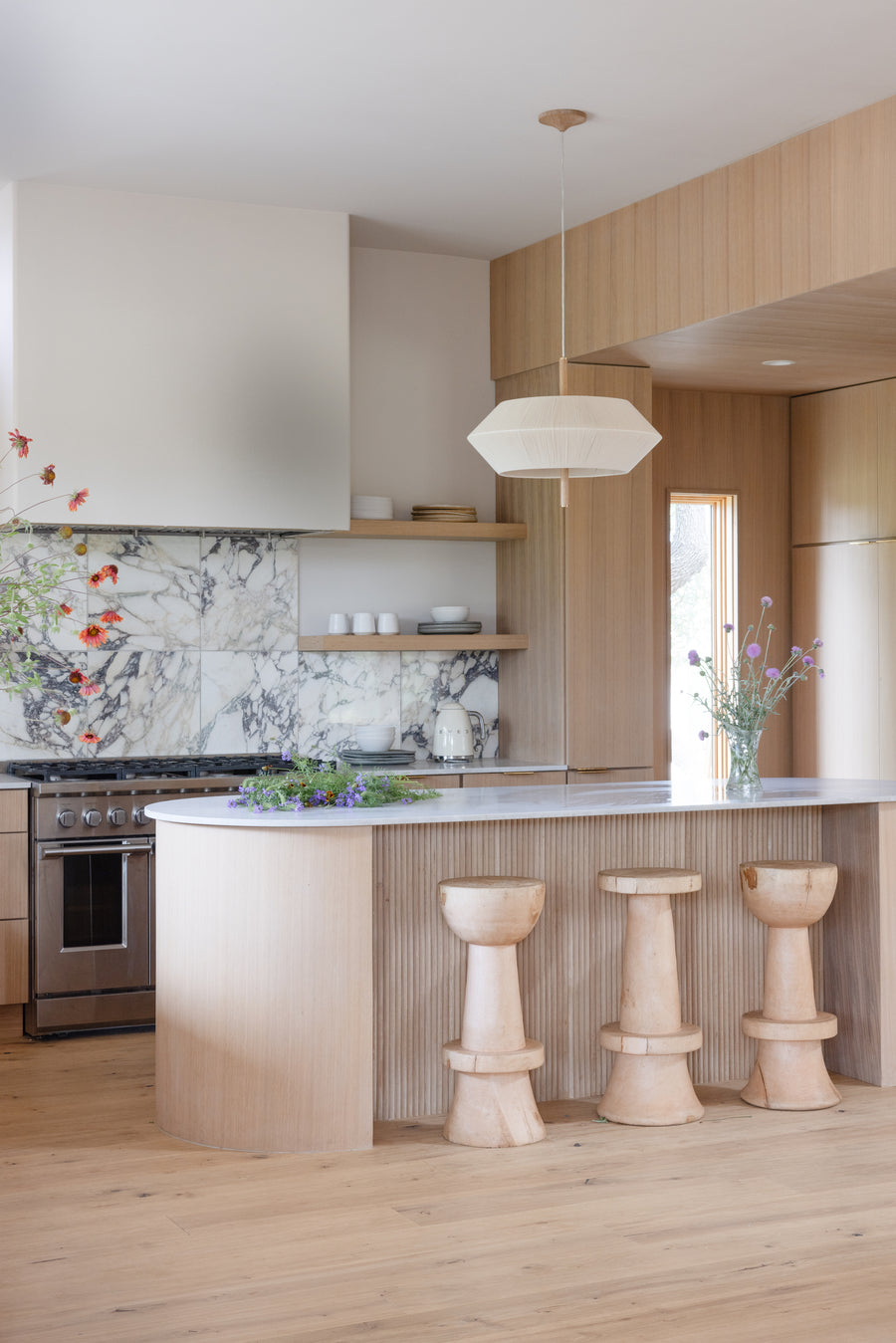
Floor: Shell | Design & Photo: Amy Pigliacampo Interiors
Designing a kitchen is all about the details, and yes, that includes what goes underneath your cabinets. If you’re planning a renovation and wondering whether your Stuga floors can run under cabinetry, you’re asking the right questions. The short answer is sometimes, and the long answer is worth understanding before your installation day arrives.
First: Pick Your Installation Method
While you can use any installation method in kitchens, only stapled and glued floors can be permanently affixed underneath items like cabinets and islands. This is because floating floors require an expansion gap around all perimeters, allowing the floor to move.
Here is how each installation method compares when it comes to cabinets.
Staple or Glue Installations
If you choose to staple or glue down your floors, you’ll be permanently attaching them to your subfloor. Because they are fully secured, they do not rely on an expansion gap around the perimeter of the room.
This means:
-
Floors can safely run underneath fixed cabinetry and kitchen islands.
-
Cabinets can be installed directly on top of the flooring.
- No additional trim is required at the base of cabinets.
If you want a seamless look with continuous flooring throughout the kitchen, this installation method makes that possible.
Floating Installations
If you choose to float your floors, they won’t be attached to your subfloor. Instead, the planks lock together and rest on top of underlayment. Because of this, they require an expansion gap around all fixed objects and walls to allow for natural movement.
For floating floors:
-
Floors should not run underneath cabinets, islands, or other permanent fixtures.
-
Cabinets must be installed first.
-
Flooring is installed up to the cabinets, leaving an expansion gap (you can determine the correct size for your expansion gap by following our installation guide).
- Trim is added afterward to conceal the gap. Tip: Go for shoe molding instead of quarter round for a slimmer, minimal profile.
Installing cabinets on top of a floating floor can restrict movement and lead to buckling or separation over time.
Can You Still Use Floating Floors in a Kitchen?
Absolutely. Floating floors work beautifully in kitchens when installed correctly. The key is planning your renovation timeline.
If you are floating your floors, cabinets must go in first. Once the cabinetry is installed, flooring is laid around it, and a slim profile trim, such as shoe molding, is added at the base to cover the expansion gap. When done well, this detail blends in seamlessly.

Planning Your Kitchen Renovation Timeline
Before installation begins, confirm your flooring method with your installer and coordinate the order of operations. A simple conversation early on can prevent costly changes later.
As a general rule:
-
Stapled or glued floors allow cabinets to be installed on top of the flooring.
-
Floating floors require cabinets to be installed first.
When in doubt, always follow our installation guidelines to protect your lifetime warranty and ensure long-term performance.
Questions? Our team has been in your shoes, and we’re happy to help! Drop us a line at hej@stuga.com or 1-844-MY-STUGA (697-8842).